
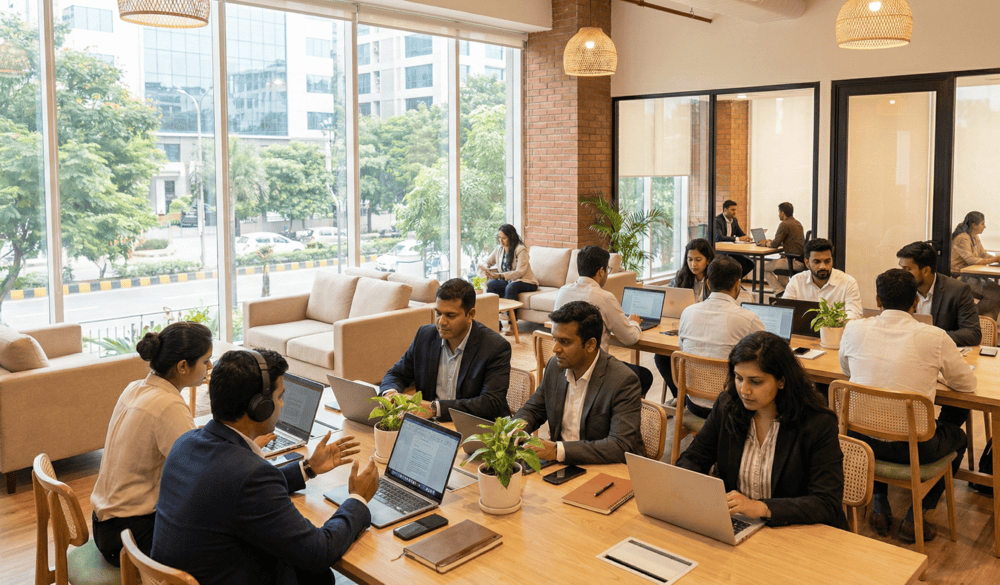
Company culture is often discussed as if it lives in slide decks, mission statements, or internal policies. In reality, culture is shaped every single day by how people work, communicate, and make decisions together. These behaviors do not happen in isolation. They happen inside a physical or virtual environment that quietly influences how people feel and act at work. This is why workspace design has become one of the most underestimated drivers of company culture, especially for startups and growing teams.
In 2025, work is no longer confined to traditional offices or fully remote setups. Startups, founders, and modern teams are actively seeking environments that support flexibility without sacrificing connection, focus, or accountability. This shift has brought coworking spaces into the spotlight, not just as cost-effective office alternatives, but as culture-shaping ecosystems. Understanding how workspace impacts culture is no longer optional. It is a strategic necessity.
What Company Culture Really Means in Practice
Company culture is not defined by what a business claims to value. It is defined by how work actually gets done when no one is watching. Culture shows up in how teams communicate under pressure, how feedback is shared, how decisions are made, and how conflicts are resolved. It is visible in whether people feel safe asking questions, whether meetings are productive, and whether individuals feel trusted to do meaningful work.
For early-stage startups and small teams, culture forms faster than most founders realize. Every decision, from how meetings are run to how workspaces are arranged, contributes to habits that become difficult to change later. When culture is shaped intentionally at an early stage, teams operate with greater clarity, alignment, and trust. When it is ignored, friction, burnout, and disengagement tend to surface quietly before becoming costly problems.
The Overlooked Connection Between Workspace and Behavior
Human behavior is deeply influenced by environment. This principle applies just as strongly to workspaces as it does to homes, schools, or public spaces. A poorly designed workspace can create distractions, stress, and miscommunication even among highly motivated teams. A thoughtfully designed workspace can encourage focus, collaboration, and accountability without forcing behavior through rigid rules.
Open layouts can promote collaboration, but they can also create constant interruptions if not balanced with private areas. Closed offices can support focus, but they can also discourage spontaneous interaction if they are too isolated. Lighting, acoustics, seating, and spatial flow all affect how people feel throughout the workday. Over time, these small influences compound into habits that define how teams work together.
Many founders underestimate this impact because it feels intangible. However, the workspace quietly sets expectations around availability, communication, and performance. It signals whether deep work is respected, whether collaboration is encouraged, and whether individuals are trusted to manage their time effectively.
Why Remote and Hybrid Teams Often Struggle With Culture
Remote work has offered flexibility and autonomy, but it has also revealed significant cultural challenges. Many teams struggle with isolation, miscommunication, and a lack of shared identity when working entirely remotely. Informal conversations disappear. New employees take longer to feel connected. Collaboration becomes more transactional.
Hybrid work models attempt to solve this problem, but they require intentional environments where teams can come together meaningfully. Simply asking people to meet occasionally without providing a supportive space often leads to inefficient meetings and frustration. Teams need environments that make in-person time valuable, not obligatory.
This is where flexible coworking spaces have become critical. They provide structure without rigidity and connection without forcing constant interaction. For many startups, coworking offers the balance that remote and traditional offices fail to achieve on their own.
Coworking Spaces as Culture Enablers, Not Just Offices
Coworking spaces are often misunderstood as shared desks and basic amenities. In reality, well-designed coworking spaces function as culture enablers. They create environments where focus, collaboration, and community can coexist without competing for attention.
When coworking is done right, it offers more than physical infrastructure. It offers psychological safety, professional energy, and exposure to diverse ways of thinking. Founders working alongside other founders gain perspective and motivation. Teams benefit from being surrounded by people who are equally invested in building something meaningful.
However, not all coworking spaces deliver this value. Spaces that prioritize density over design or occupancy over experience often recreate the same problems found in poorly planned offices. The difference lies in how intentionally the space is designed to support different work modes and human needs.
What a Culture-Friendly Workspace Actually Looks Like
A culture-friendly workspace does not force everyone to work the same way. Instead, it provides flexibility while maintaining structure. It recognizes that focus, collaboration, and belonging are all essential parts of a healthy work culture.
Spaces Designed for Focus
Focused work requires quiet, privacy, and minimal interruption. Private cabins, sound-controlled rooms, and designated quiet zones allow individuals and teams to concentrate deeply without constant distractions. When focus is supported by design, productivity improves without requiring longer hours or micromanagement.
Spaces Designed for Collaboration
Collaboration thrives in spaces that encourage open discussion without chaos. Meeting rooms with proper acoustics, brainstorming zones with whiteboards, and informal seating areas enable teams to exchange ideas freely. These spaces signal that collaboration is valued and expected, not disruptive.
Spaces Designed for Belonging
Belonging is created through shared experiences. Lounges, breakout areas, and community events help people connect beyond tasks and deadlines. When individuals feel a sense of belonging, they are more likely to contribute openly, support one another, and stay engaged over the long term.
How Workspace Design Influences Accountability and Trust
Trust is one of the strongest predictors of high-performing teams. Workspace design plays a subtle but important role in building or eroding trust. Environments that allow transparency without surveillance communicate confidence in people’s professionalism. Environments that rely on constant monitoring often signal distrust, even when intentions are good.
When teams have access to spaces that support both visibility and privacy, accountability develops naturally. People take ownership of their work because they feel respected, not controlled. Meetings become more focused because time together is intentional. Feedback flows more easily because the environment supports open conversation.
Why Startups Benefit Disproportionately From the Right Workspace
Startups operate under uncertainty, pressure, and rapid change. In such conditions, culture either becomes a stabilizing force or a hidden liability. A supportive workspace helps teams navigate ambiguity by providing consistency and structure without rigidity.
Coworking spaces offer startups the ability to scale up or down without long-term commitments. This flexibility reduces operational stress and allows founders to focus on growth rather than infrastructure. More importantly, coworking environments expose teams to a broader professional ecosystem, which often leads to learning, collaboration, and unexpected opportunities.
For early-stage companies, these benefits can significantly influence morale, resilience, and long-term success.
How Spark Plug Is Designed Around Culture
Spark Plug approaches coworking as a people-first experience rather than a real estate solution. The space is designed to balance focus and interaction without forcing either. Private cabins coexist with collaborative zones, allowing teams to choose how they work rather than adapting to a rigid layout.
The environment supports growing teams who need flexibility as their work evolves. Design decisions prioritize comfort, functionality, and flow, ensuring that the space adapts to people rather than the other way around. Community initiatives are curated to encourage meaningful connection without overwhelming individuals who prefer quieter workdays.
This approach reflects an understanding that culture cannot be imposed. It must be supported by environments that respect different working styles while fostering shared purpose.
Culture as a Business Advantage, Not a Soft Concept
Culture directly influences business outcomes. Teams with healthy cultures experience better retention, higher engagement, and faster decision-making. They adapt more easily to change because trust and communication are already established.
A well-designed workspace accelerates these benefits by reinforcing positive behaviors every day. It reduces friction, supports mental well-being, and creates conditions where people can do their best work consistently. For startups competing for talent and traction, this advantage is difficult to replicate through perks or policies alone.
Questions Founders Should Ask Before Choosing a Workspace
Founders should evaluate workspaces not just for cost or location, but for cultural alignment. A few critical questions can reveal whether a space will support or hinder team culture.
Founders should consider whether the environment encourages open communication and focus. They should assess whether the space can adapt as the team grows. They should observe whether people appear engaged and comfortable rather than rushed or isolated. Most importantly, they should ask whether the workspace supports the kind of culture they want to build, not just the work they need to complete today.
The Long-Term Impact of Where Work Happens
Workspaces shape habits, and habits shape culture. Over time, the environment where work happens influences how teams think, collaborate, and perform. Choosing the right workspace is one of the fastest and most practical ways to influence culture without lengthy change management processes.
In 2025, as work continues to evolve, intentional workspace choices will separate teams that merely function from teams that thrive. Culture will not be built through slogans or perks alone. It will be built in the spaces where people show up every day to do meaningful work.
Final Thoughts
Company culture is not an abstract concept reserved for HR discussions. It is a living system shaped by daily behaviors, relationships, and environments. Workspaces play a central role in this system, whether leaders acknowledge it or not.
For startups and modern teams, choosing a workspace is a strategic decision that affects productivity, engagement, and long-term success. Coworking spaces that are designed with culture in mind offer a powerful foundation for teams that want flexibility without fragmentation.
Building a strong culture starts with understanding where work actually happens and designing that environment intentionally. When workspace and culture align, teams do not just work better. They grow stronger together.