The Four Archetypes That Shape Productivity at Sparkplug
Everyone works differently. Some people thrive when they dive into long hours of deep concentration. Others feel energized by collaboration and social interaction. Productivity is not just about the task, it is also about your inner energy patterns and the environment that supports them.
At SparkPlug, we believe productivity is deeply personal. That’s why we created the Four Work Energy Types framework. This simple model goes beyond job titles or roles. It helps you understand how you work best. In this blog, you will learn about these four archetypes. You will also see how SparkPlug is designed to support each type. Finally, you will get guidance to identify your own “work energy type” and find the workspace style that fits your rhythm.
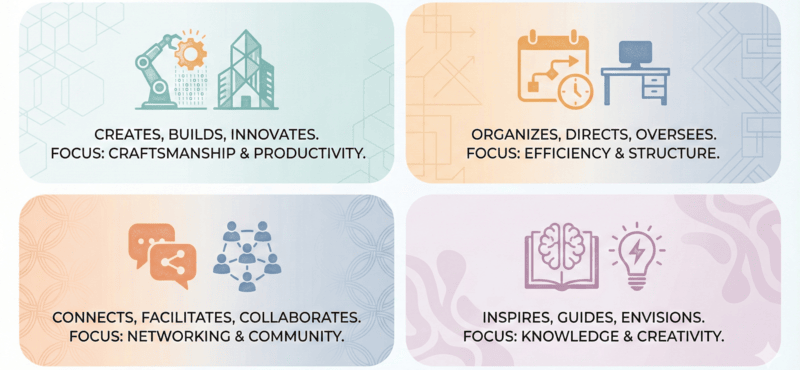
Quick Summary of the Four Work Energy Types
- Maker – the deep focus creator. Works best in quiet, uninterrupted environments, building or producing substantial individual output.
- Manager – the planner and organizer. Thrives on structure, clarity, coordination, and overseeing tasks and processes.
- Mixer – the collaborator and network builder. Gains energy from people, conversations, teamwork and spontaneous idea exchange.
- Muse – the creative idea generator. Flourishes in flexible, inspiring spaces and during free-flow thinking, brainstorming, and imaginative work.
This summary gives a quick view, keep reading to explore each type in depth and see how SparkPlug supports them all.
What Does It Mean to Have a Work Energy Type
A “work energy type” refers to the natural way you produce, focus, collaborate or ideate. It is not about your profession or role, but about your working style and energy rhythm.
Many people shift between types depending on the task or time of day. That’s okay. Think of this framework as a lens to understand your work rhythm rather than rigid categories. With this understanding, you can shape your work environment to match your energy, and get more out of every workday.
Maker: The Deep Focus Creator
Makers are the ones who do their best when uninterrupted. They enjoy concentration, detailed work, crafting, coding, designing or writing. For them, productivity comes from extended focus, minimal distractions and a stable routine.
Strengths: They deliver quality, depth, and precision. Makers are often the backbone of projects, the ones building core features, writing the code, designing the product, crafting the content.
Challenges: Noise, interruptions, or frequent movement between tasks can disrupt their flow. Makers also need clear boundaries between work time and rest time.
Best environment: A quiet zone, stable internet connection, ergonomic desk and comfortable seating. Consistency in setup helps, a place you can return to without worrying about external disruptions.
Manager: The Planner and Coordinator
Managers thrive on structure. They like to plan, organize, coordinate teams or projects, manage deadlines and oversee workflows. Their strength lies in clarity, process, scheduling and coordination.
For Managers, productivity is not just individual output, it is about alignment, collaboration, systems, and orchestration. They value clarity about who does what and when.
Best environment: A mix of private/semi-private rooms, good communication infrastructure, scheduling tools or meeting rooms, and a space that supports team meetings or client calls. Quiet is less critical than clarity and convenience.
Mixer: The Collaborator and Network Builder
Mixers are energized by people. They enjoy conversations, spontaneous brainstorming, collaboration, networking and the buzz of shared energy. For them, work is often social discussion fuels ideas, and collaboration accelerates progress.
Strengths: Mixers excel in group work, creative problem solving, community building, client interactions, networking, and roles that require communication. They bring energy, keep momentum, and often help teams gel.
Best environment: Open collaborative areas, lounges, communal zones, event spaces, and opportunities for chance interactions. A vibrant, social environment helps them thrive.
Muse: The Creative Idea Generator
Muses are driven by inspiration. They do their best when ideas flow naturally, during brainstorming, ideation sessions, creative thinking, conceptualizing new projects or designing something innovative. Muses thrive on flexibility, light structure, variety, and creative freedom.
Strengths: They bring fresh ideas, innovation, creative solutions, and new perspectives. Muses contribute to long-term vision, strategy, innovation and originality.
Best environment: Flexible work zones, comfortable seating, aesthetic or inspiring design, open layouts, areas to move around. A lot of freedom to switch context, soak in ambience, and let ideas emerge organically.
The Psychology Behind Work Energy Types
Research and user experience show that people working from coworking spaces often report higher well-being, productivity and work engagement compared to working from home.
Well-designed work environments that offer varied zones, quiet desks, collaborative lounges, private cabins, support different working styles and tasks.
When you align your workspace environment with your working style and energy, you reduce friction, increase comfort, and maximize output. This is why a “one-size-fits-all” approach rarely works. Coworking spaces that accommodate diverse needs tend to produce better results.
How SparkPlug Supports All Four Work Energy Types
Here is how SparkPlug’s design and amenities cater to Makers, Managers, Mixers, and Muses, so you can work in the way that fits you best.
How SparkPlug Supports Makers
- Provides quiet zones or silent desks for deep focus work
- Stable high-speed internet and good ergonomic desks help sustain long work hours
- Minimal distractions and clear separation between “work mode” and “relax mode”
How SparkPlug Supports Managers
- Private or semi-private rooms and cabins for project coordination and meetings
- Dedicated meeting rooms and scheduling tools for team calls or group work
- Flexibility to scale up workspace or book spaces as per project demands
How SparkPlug Supports Mixers
- Open areas, lounges and communal spaces designed for interaction
- Community events, networking sessions or casual meetups to foster connections
- Shared amenities like coffee zones or breakout spaces, perfect for spontaneous chats or collaborations
How SparkPlug Supports Muses
- Creative corners or flexible seating that allow for movement and inspiration
- Aesthetic interiors, comfortable seating, and flexible layouts to spark creativity
- Option to shift zones, from focused desks to relaxed lounges — based on mood and task
SparkPlug is built not for a single kind of worker but for all kinds of working energy. Its flexibility, variety, and thoughtful design recognize that work is not one-dimensional.
How to Identify Your Own Work Energy Type
Here are some reflective questions you can ask yourself. Your answers might hint at your dominant work energy style:
- Do you feel drained after long periods of social interaction or do you get energized?
- Do you prefer long hours of uninterrupted focus or frequent changes in task and energy?
- Does planning, scheduling and managing tasks energize you more than creative brainstorming?
- Do you get your best ideas during quiet reflection or during casual conversations?
- Do you prefer structure, deadlines, and a routine or do you thrive with flexibility and freedom?
You may find you identify with more than one type. Many people shift between types depending on the project, day or mood. The key is to observe, try different zones and workflows. Notice when you feel most energized and productive.
Real User Scenarios at SparkPlug
Imagine a freelance graphic designer. On design-heavy days they act like a Maker, using a quiet desk to focus. Later, when collaborating with a writer, they shift into a Mixer mode — brainstorming ideas over coffee in the lounge.
Or consider a small startup founder. During planning and coordination days, they function as a Manager, using a private cabin for team calls, project planning and meetings. On creative days, they turn into a Muse, sketching ideas on a whiteboard in a relaxed corner.
These scenarios show how SparkPlug supports different energy patterns, without requiring you to “fit in.”
Why Understanding Your Work Energy Type Matters
When you understand your work energy type you make smarter decisions about where and how you work. This awareness helps you choose environments and workflows that align with your natural rhythm.
Over time this leads to better productivity, improved well-being, higher job satisfaction and less burnout. It also helps you communicate your needs, to clients, team members, or even yourself.
If more coworking spaces embraced this mental model, the future of work could shift from “one-size-fits-all offices” to personalised, energy-aware workspaces that adapt to the person, not the other way around.
Frequently Asked Questions
Can someone be more than one work energy type?
Yes. Many people shift between types depending on their task, mood or time of day. The Four Work Energy Types framework is a lens, not rigid categories.
What if my work energy type changes over time?
That is normal. Life, experience, roles and responsibilities evolve. Your work energy pattern may shift too. The key is to stay aware and adjust your workspace or work practices accordingly.
How do I know which workspace suits my productivity style?
Observe your natural working habits. Reflect on when you feel most focused or creative. Try different workspace zones, quiet desks, collaboration lounges, private cabins, creative corners, and pay attention to how it feels.
Do coworking spaces work for introverts or people who prefer solitude?
Absolutely. Coworking spaces that offer quiet zones, private cabins and flexible seating can work very well for introverts or deep-focus creators. The shared community is optional.
Can this framework improve team collaboration?
Yes. When team members understand each other’s energy types — who’s a Maker, who’s a Mixer, they can plan better. They can choose the right setting: quiet for deep work, lounge for brainstorming, private room for meetings. This matching leads to smoother collaboration and higher efficiency.
Conclusion
The Four Work Energy Types- Maker, Manager, Mixer, Muse help you understand how you naturally work. Recognizing your own energy style can transform the way you approach productivity, creativity and collaboration.
At SparkPlug we believe in supporting every kind of worker. Whether you are a deep-focus developer, a structured planner, a community-driven collaborator or a free-thinking creative, there is space for you here.
Take a moment to reflect. Which type resonates most with you right now? Then come to SparkPlug, explore our zones and find the environment where you can do your best work.
Welcome to your best work self.